
All praise is for Allāh; may salutations of praise and peace be upon the Messenger of Allāh, his family, companions and those who support him. Thereafter,
‘Eid Al-Fiṭr is approaching – may Allāh make it an occasion of happiness, good and blessings. May Allāh make it a cause of honour, unity and authority of the religion of Allāh.
On this blessed occasion, I would like to remind my Muslim brothers and sisters of some manners and Prophetic recommendations of Eid, as well as clarifying some innovations and sins that occur on ‘Eid. I have also mentioned the importance of Zakāt al-Fiṭr which is given before ‘Eid Ṣalāh.
Zakāt al-Fiṭr before ‘Eid Ṣalāh
I seek guidance and help from Allāh and say: O my Muslim brother and sister, I advise you to be diligent in giving Zakāt al-Fiṭr before the ‘Eid Ṣalāh, which Allāh has made a means of purifying the deficiencies in your fasting such as idle speech and bad actions.
Ensure Zakāt al-Fiṭr is given in the form of the staple food of your country. This is in keeping with the guidelines of the Prophet ﷺ: he obligated Zakāt al-Fiṭr to be given as a Ṣā‘ (approximately 3 kgs) of dates or barley. It is an obligation upon every Muslim – male or female, old or young, free or slave. He ordered for it to be given before people go out to the ‘Eid Ṣalāh.
Abu Sa‘īd al-Khudrī narrates:
We used to give Zakāt al-Fiṭr in the form of a Ṣā’ of food, barley, dates, dried yogurt or raisins.
The Eid of the Muslims
‘Eid al-Fiṭr is our ‘Eid, O people of Islām. The Messenger of Allāh ﷺ saw two young slave-girls singing near him, and he said:
Allow them to do this; indeed every people have an ‘Eid and this is our ‘Eid.
It has also been narrated that the Prophet ﷺ said:
The Day of ‘Arafah and the days of Tashrīq are our Eid, O people of Islām.
Legislated actions of ‘Eid al-Fiṭr
1. Saying takbīr on the day of ‘Eid: This begins as soon as ‘Eid is announced and ends with the ending of the ‘Eid Ṣalāh.
Allāh, the most high, said:
{وَلِتُكْمِلُوا الْعِدَّةَ وَلِتُكَبِّرُوا اللَّهَ عَلَىٰ مَا هَدَاكُمْ وَلَعَلَّكُمْ تَشْكُرُونَ} البقرة: ١٨٥
{So that you may complete the period and glorify Allāh for that which He has guided you; and perhaps you will be grateful} [02:185]
The authentic way of saying takbīr according to the companions, radiaAllāhu ‘anhum, is:
الله أكبر الله أكبر الله أكبر كبيراً
Allāhu akbar, Allāhu akbar, Allāhu Akbar kabīrah
Alternatively a person can say:
الله أكبر الله أكبر لا إله إلا الله ، الله أكبر ولله الحمد
Allāhu Akbar, Allāhu Akbar, Lā ilāha illa Allāh, Allāhu Akbar wa lillāhil ḥamd
Apart from these two examples, and the various additions we hear in many masājid then I have not come across any narration for them.
2. Performing ghusl for the Eid Ṣalāh, wearing the best clothes and perfume.
3. Eating some dates or anything else before leaving the house and going to the muṣalla (outside open area) for the Eid Ṣalāh.
4. Saying the takbīr out aloud on the way to the ‘Eid Ṣalāh.
5. Going to the muṣalla using a particular route, and returning home using another route.
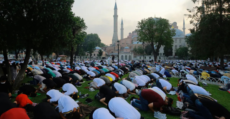
6. Praying ‘Eid Ṣalāh in an open outdoor area is the Sunnah of the Messenger of Allāh ﷺ, so be diligent upon this and call others to do so. If however you pray in the masjid for a particular need then it is permitted.
7. Bringing women, children and infants to ‘Eid Ṣalāh, even the menstruating women, adolescent girls and unmarried.
It has been narrated in Ṣaḥīḥ Muslim that Umm ‘Aṭiyyah:
The Messenger of Allāh ﷺ ordered us to go out [i.e. to the muṣalla] for both al-Fiṭr and al-Aḍḥā. [He ordered] the young adolescent girls, menstruating women as well as the virgin (i.e. unmarried) girls. As for the menstruating woman, [they were ordered] to stay away from the actual Ṣalāh.
8. Praying the ‘Eid Ṣalāh as two Rak’ah. In the first rak’ah a person says seven additional takbīr after the first takbīr to initiate the Prayer. In the second Rak’ah, he says five takbīr . This is before the recitation of the Fātiḥah.
The imām should recite Sūrah al-A’lā in the first rak’ah and Sūrah al-Ghāshiyah in the second rak’ah.
Nu’mān Ibn Bashīr narrates,
The Prophet ﷺ would recite in the both Eid Ṣalāh and on Jumu’ah: ‘sabbih isma rabbika al-a’la’ (i.e. Sūrah al-A’lā) and ‘hal ataaka hadeeth ul-ghaashia (i.e. Sūrah al-Ghāshiyah).
9. To listen to the khutbah (sermon) after Eid Ṣalāh , this is a sunnah (a recommended action), however here is no blame upon a person who does not listen to the khutbah and leaves.
10. Giving congratulating with the greetings of ‘Eid is authentically narrated from the companions (may Allaah be pleased with them) however it is not authentically narrated about the Prophet (sal Allaahu alayhi wa sallam) in a Saheeh Hadeeth.
It has been narrated regarding the companions, upon the authority of Jubayr ibn Nufayr who said,
When the companions of the Prophet (sal Allaahu alayhi wa sallam) used to meet on the day of ‘Eid some of them would say to the others, “May it be accepted from us and them”
Al-Hafidh Ibn Hajar commented: Its chain of narration is Hassan (good).
Innovations on ‘Eid.
My brother Muslim, be diligent in avoiding innovations and sins in every situation. ‘Every innovation is a Bid’ah, every Bid’ah is misguidance and every misguidance is in the Fire.’
1. Making congregational Takbeer on ‘Eid in the Masjid or Musallah (Prayer Area).
This is often done by the people being divided into two groups, one group says the Takbeer and then the other group follows them. This is an action which is innovated. The correct way is for each individual to say the Takbeer, if they coincide with each other in congregation then there is no problem. As for the above method of one group saying it whilst the other remains silent and then they say it – then this is an innovation.
2. Visiting graveyards on the day of ‘Eid and offering sweets, flowers and wreaths at the graveyard. Such matters are innovated actions which the Prophet (sal Allahu alayhi wa sallam) did not do.
As for visiting graveyards, then it is recommended to do so without specifying any time or day. The Prophet (sal Allaahu alayhi wa sallam) said,
Visit graves, it will remind you of the Hereafter
3. Exchanging celebration cards or greeting cards – this is from the ways of the Christians and their culture. I heard our Shaykh Al-Allaamah Albaani (May Allah shower him with mercy) warning against this.
O my Muslim brother, be diligent in staying away from the ways of those whom Allaah is angry over and those who are misguided. Rather you should be upon the ways of the righteous people who traverse the straight path.
Some of the sins that people fall into in ‘Eid
1. Men beautifying themselves by shaving their beards. The obligation upon men is to allow the beards to grow, and this does not differ due to any occasion. It is upon a Muslim that he shows gratitude to his Lord on this blessed day. He fulfils his happiness by obedience to Allaah, not in sinning and disobedience.
2. Men and women who are not related to each other shaking hands. This is from the impermissible actions and the major sins. The Prophet (sal Allaahu alayhi wa sallam) said,
For one of you to be stabbed in the head with an iron needle is better for him than that he should touch a woman who is not permissible for him.
3. Being extravagant in wasting large amounts of money on entertainment and fireworks without any benefit. It is more appropriate to spend this money on the poor, widows, orphans and the needy; they are so many in number and severe in their need.
Additionally, wasting money on fireworks and crackers can also lead to danger such as people being injured, harmed or startled – especially the young, old and those asleep.
4. The spread of gambling in some countries on the day of Eid, and this is more prevalent among the youth. This is one of the major sins; it is upon the parents to monitor their children on the day of Eid, and warn them of such actions.
May Allaah accept from me and you, and keep you upon goodness this and every year
May Allāh accept from me and you, and keep you upon goodness this and every year.
Written by,
[Shaykh] ‘Āṣim ibn ‘Abdillāh al-Quryūṭī
Footnotes
[TN] Translated with slight adaptions after permission from the Shaykh
هذا عيدنا أهل الإسلام … تقبل الله منا ومنكم
المرجع: المرجع بالعربية
الحمد لله والصلاة والسلام على رسول الله وعلى آله و صحبه و من والاه وبعد :
فمناسبة اقتراب عيد الفطر السعيد أعاده الله علينا وعلى جميع المسلمين بالسعادة والعزة والخير والبركات والمجد والعودة الحقة إلى دين الله غز وجل ، أذكر إخواني المسلمين بجملة من آداب وسنن العبد مع التنبيه على بعض البدع والمعاصي التي تقع في العيد مع ملاحظة إخراج زكاة الفطر قبل صلاة العيد فأقول وبالله التوفيق ومنه أستمد العون والسداد :
عليك أخي المسلم بالحرص على إخراج زكاة الفطر التي جعلها الله عز وجل طهرة للصائم من اللغو والرفث قبل صلاة العيد.
واحرص على أدائها من طعام قوت أهل بلدك تلبيةً لتوجيه نبيك حيث فرض رسول الله صلى الله عليه وسلم زَكَاةَ الْفِطْرِ صَاعًا مِنْ تَمْرٍ أَوْ صَاعًا مِنْ شَعِيرٍ عَلَى الْعَبْدِ وَالْحُرِّ وَالذَّكَرِ وَالْأُنْثَى وَالصَّغِيرِ وَالْكَبِيرِ مِنْ الْمُسْلِمِينَ وَأَمَرَ بِهَا أَنْ تُؤَدَّى قَبْلَ خُرُوجِ النَّاسِ إِلَى الصَّلَاةِ .
ويقول أبو سعيد الخدري كما في صحيح البخاري :”كُنَّا نُخْرِجُ زَكَاةَ الْفِطْرِ صَاعًا مِنْ طَعَامٍ أَوْ صَاعًا مِنْ شَعِيرٍ أَوْ صَاعًا مِنْ تَمْرٍ أَوْ صَاعًا مِنْ أَقِطٍ أَوْ صَاعًا مِنْ زَبِيبٍ”.
وإن عيد الفطر عِيدُنَا أَهْلَ الْإِسْلَامِ و قد قال الرسول صلى الله علبه وسلم كما في قصة الجاريتين اللتين كانتا تغنيان عند النبي صلى الله عليه وسلم :”دعهما فإن لكل قوم عيدا وهذا عيدنا “رواه البخاري وعن عقبة بن عامر عن النبي صلى الله عليه وسلم قال :” يوم عرفة وأيام التشريق عيدنا أهل الإسلام “
وأما أحكام عيد الفطر و آدابه :
فأولها التكبير يوم العيد ويبتدأ من ثبوت العيد وينتهي بصلاة العيد .
وقد قال الله تعالى (وَلِتُكْمِلُوا الْعِدَّةَ وَلِتُكَبِّرُوا اللَّهَ عَلَى مَا هَدَاكُمْ وَلَعَلَّكُمْ تَشْكُرُونَ) (البقرة الآية185)
وصيغة التكبير الثابتة عن الصحابة رضي الله عنهم : ( الله أكبر الله أكبر الله أكبر كبيراً )
و ( الله أكبر الله أكبر لا إله إلا الله ، الله أكبر ولله الحمد ) ويحسن الاقتداء بها
وما عدا ذلك من صيغ التكبير والزيادات التي نسمعها في كثير من المساجد فلم أقف لها على إسناد .
2) الاغتسال لصلاة العيد ولبس أحسن الثياب والتطيب لذلك .
3) الأكل قبل الخروج من المنزل على تمرات أو غيرها قبل الذهاب لصلاة العيد الفطر.
4) الجهر في التكبير في الذهاب إلى صلاة العيد
5) الذهاب من طريق إلى المصلى والعودة من طريق آخر .
6) صلاة العيد في المصلى هي سنة رسول الله صلى الله عليه وسلم فاحرص عليها وادع لها ، وإن صليت في المسجد لسبب أو لآخر جاز ذلك
7) اصطحاب النساء والأطفال والصبيان دون استثناء حتى الحيض و العواتق وذوات الخدور من النساء كما جاء في صحيح مسلم عَنْ أُمِّ عَطِيَّةَ رضي الله عنها قَالَتْ أَمَرَنَا تَعْنِي النَّبِيَّ صَلَّى اللَّهُ عَلَيْهِ وَسَلَّمَ أَنْ نُخْرِجَ فِي الْعِيدَيْنِ الْعَوَاتِقَ وَذَوَاتِ الْخُدُورِ وَأَمَرَ الْحُيَّضَ أَنْ يَعْتَزِلْنَ مُصَلَّى الْمُسْلِمِينَ .
8) أداء صلاة العيد ركعتان يكبر في الأولى سبع تكبيرات غير تكبيرة الإحرام وفي الثانية خمس تكبيرات قبل الفاتحة أيضاً ، ويقرأ الإمام فيهما سورة الأعلى والغاشية كما في صحيح مسلم عَنْ النُّعْمَانِ بْنِ بَشِيرٍ قَالَ كَانَ رَسُولُ اللَّهِ صَلَّى اللَّهُ عَلَيْهِ وَسَلَّمَ يَقْرَأُ فِي الْعِيدَيْنِ وَفِي الْجُمُعَةِ بِسَبِّحِ اسْمَ رَبِّكَ الْأَعْلَى وَهَلْ أَتَاكَ حَدِيثُ الْغَاشِيَةِ.
9) الاستماع إلى الخطبة التي بعد صلاة العيد سنة ومن لم يحضر لخطبة وقام بعد الصلاة فلا ضير عليه .
10) التهنئة بالعيد ثابتة عن الصحابة رضي الله عنهم ، ولم تثبت عن رسول الله صلى الله عليه وسلم في حديث صحيح
وأما عن الصحابة فعن جبير بن نفير قال كان أصحاب رسول الله صلى الله عليه وسلم إذا التقى يوم العيد يقول بعضهم لبعض : “تقبل منا ومنك” قال الحافظ ابن حجر العسقلاني رحمه الله إسناده حسن .
واحرص أخي المسلم على اجتناب البد والمنكرات في كل حين إذ ” كل محدثة بدعة وكل بدعة ضلالة وكل ضلالة في النار” كما صح ذلك عن رسول الله صلى الله عليه وسلم .
ومن بدع العيد :
1) التكبير بالعيد بالمسجد أو المصلى بالصيغ الجماعية على شكل فريقين يكبر الفريق الأول ويجيب الفريق الآخر إذ هذه طريقة محدثة والمطلوب أن يكبر كل واحد بانفراد ولو حصل اتفاق في ذلك فلا ضير ، و أما على الطريق المسموعة يكبر فريق و الآخر يستمع حتى يأتي دوره فهي بدعة .
2) زيارة القبور يوم العيد وتقديم الحلوى و الورود و الأكاليل و نحوها على المقابر كل ذلك من البدع والمحدثات لم يفعله رسول الله صلى الله عليه وسلم وأما زيارة القبور من غير تقييد بوقت محدد فهي مندوبة مستحبة لقول رسول الله صلى الله عليه وسلم ” زوروا القبور فإنها تذكركم بالآخرة ” .
3) تبادل بطاقات التهاني المسماة ( بطاقة المعايدة ) أو كروت المعايدة من تقليد النصارى وعاداتهم و لقد سمعت شيخنا العلامة الألباني تغمده بالرحمة نبه على ذلك فاحرص أخي المسلم على مجانبة طريق المغضوب عليهم والضالين ولتكن من الصالحين السائرين على الصراط المستقيم .
ومن معاصي العيد :
1) تزين بعض الرجال بحلق اللحى إذ الواجب إعفاؤها في كل وقت والواجب أن يشكر المسلم ربه في هذا اليوم ويتمم فرحه بالطاعات لا بالمعاصي والآثام .
2) المصافحة بين الرجال و النساء الأجنبيات ( غير المحارم ) إذ هذا من المحرمات والكبائر وقد جاء في الحديث الصحيح كما في المعجم الكبير للطبراني وغيره :”لأَنْ يُطْعَنَ فِي رَأْسِ أَحَدِكُمْ بِمِخْيَطٍ مِنْ حَدِيدٍ خَيْرٌ لَهُ مِنْ أَنْ يَمَسَّ امْرَأَةً لا تَحِلُّ لَهُ”.
3) ومن الإسراف بذل الأموال الطائلة في المفرقعات والألعاب النارية دون جدوى ، وحري أن تصرف هذه المبالغ على الفقراء والأرامل والأيتام والمساكين والمحتاجين وما أكثرهم وما أحوجهم !
إضافة لما قد تسببه من أضرار من فتل أو إعاقة أو ترويع للصغار والنائمين وغيرهم.
4) انتشار ظاهرة اللعب بالميسر والمقامرة في بعض الدول يوم العيد ، وخاصة عند الصغار ، وهذا من الكبائر العظيمة فعلى الآباء مراقبة أبنائهم في هذه الأيام وتحذيرهم من ذلك .
تقبل الله مني ومنكم .. وكل عام وأنتم بخير
والسلام عليكم ورحمة الله وبركاته
كتبه :أ.د. عاصم بن عبد الله القريوتي
AlQaryoti@gmail.com